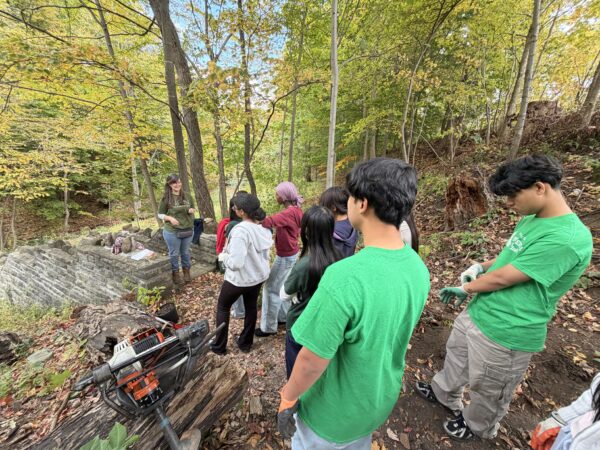
If you had been walking the upper loop in early October, and looking through the newly cleared ridgeline down into the wooded ravine, you would have seen Olmsted City volunteers out planting trees and shrubs with students from Proctor High School’s Environmental Club. You might have wondered, “It looks like there are already a lot of plants growing here, so why are they planting more?” To put it simply – biodiversity.
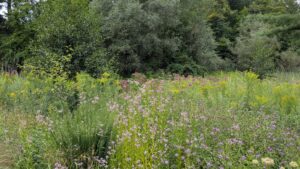
Biodiversity is the abundance of life in any particular place or ecosystem. This includes plants, insects, fungi, animals, microbes, all interacting and supporting the health of the whole. The more variety of life in a place, the more stable and resilient nature can be. Imagine a field where only one type of flower grows and blooms. A particular beetle that happens to love the taste of this flower settles here and eats every last one. What now happens to the family of bees that live here with no pollen to collect? How much farther do the migrating butterflies have to travel for nectar to fuel their flight? Soon, the northern cardinal will face a lack of seeds to get them through the cold winter. Now imagine that same field filled with many types of flowers and grasses. The beetle still moves in, but there are plenty of other flowers it doesn’t eat to support the bees and the cardinal. The grasses attract other insects, some of which might enjoy the taste of our beetle, keeping its population in check, and allowing some of the beetle’s preferred flower to survive. This very simply describes how increasing biodiversity creates a healthier, more resilient system.
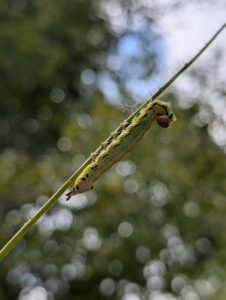
White-lined Sphinx Moth caterpillar
Looking more closely, we find these interactions in nature can be even more specialized. One example is the relationship between plants and caterpillars and how this relationship affects the population of birds. Caterpillars are the larval form of butterflies and moths and are a critical link in the food web connecting plants and other mammals like songbirds. It turns out, almost all small birds feed their babies caterpillars – soft, squishy packets of protein and other nutrients that can be easily stuffed into the hungry mouths of baby birds. In fact it was recently discovered that one clutch of chickadees requires 6-9,000 caterpillars to grow big enough to leave the nest. That’s a lot of caterpillars! How can we help this ravine support not just one nest of songbirds, but many?
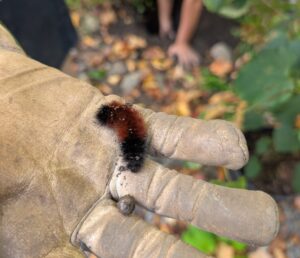
Banded Woolly Bear
Most of the insects that eat plants, caterpillars included, can only eat certain plants they evolved with over generations, known as host plants. For example, the Monarch butterfly caterpillar can only eat the leaves of milkweed plants. Without milkweed, Monarch butterflies can’t exist. And this is true for most species of butterflies and moths. If our ecosystems aren’t filled with the native plants that our insects need to eat, that means fewer caterpillars for the birds to eat, which means fewer nests of birds able to grow to adulthood. Over time, this reduces the biodiversity of a place, and could lead to the collapse of the system as a whole.
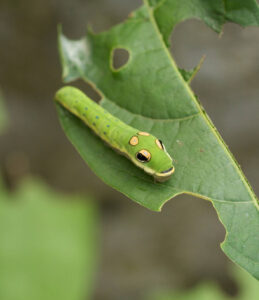
Spicebush Swallowtail caterpillar Image Credit Ryan Haggerty USFWS
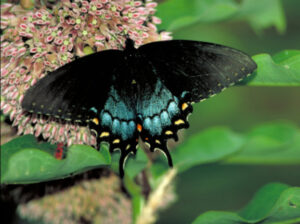
Spicebush Swallowtail Image Credit USFWS
So here’s our answer! This is why we are planting more trees and shrubs in the already wooded ravine at FT Proctor Park. On this particular October day we planted Spicebush (Lindera benzoin), a shrub that prefers the dappled sunlight of the understory. The Spicebush Swallowtail caterpillar can only eat the leaves of this plant. Spicebush also produces berries in the fall that are essential for migrating songbirds during their long trek south for the winter. This one plant provides food for a caterpillar that in turn feeds baby birds in the spring, and then in the fall provides food for those same adult birds as they travel back through.
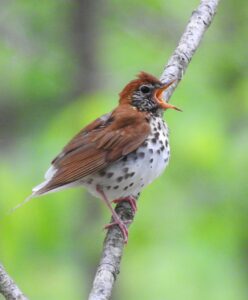
Wood Thrush Photo Credit Michael Schramm USFWS
We also planted Mountain Maple (Acer spicatum), a small tree that grows in the shade of taller, existing trees. Over 250 types of caterpillars can eat the leaves of this maple tree. That’s a lot of potential food for baby birds like the Wood Thrush, which will only nest in smaller trees and shrubs closer to the ground. We added 2 types of ferns to the ravine ecosystem – Ostrich Fern and Christmas Fern. These plants are eaten by fern borer moth caterpillars, hopefully providing more resources for our mama birds to feed their babies. Ferns also create a cool, soft understory habitat for butterfly and moth species that overwinter in leaf litter on the ground, as well as frogs and salamanders that live along the ravine’s creek.
All of these native plants were chosen to increase the variety of plant species in this ravine habitat, to increase the variety of life that can thrive here, and thereby improving biodiversity and the health of this small forest ecosystem. They are also beautiful plants that will make the ravine a pleasing destination for human visitors to FT Proctor Park, which in turn improves our health and wellness too. We hope during your next visit you will venture down into the ravine to experience it yourself.
-
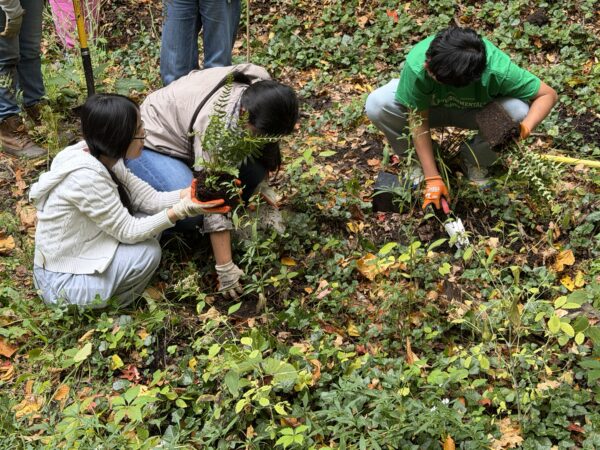
- Students from Proctor HS Environmental Club planting in the ravine at FT Proctor Park.
https://olmstedcity.org/how-do-insects-survive-the-winter/
https://www.amnh.org/research/center-for-biodiversity-conservation/what-is-biodiversity
https://www.tnvalleynaba.org/butterfly-gardening/creating-a-garden/host-and-nectar-plants/
https://www.audubon.org/magazine/new-research-further-proves-native-plants-offer-more-bugs-birds